home › Forums › Device, App & Web Security › Other Web, App Security › KKM Confirms Cyber Breach as Panzer Claims Ransomware Attack
- This topic has 0 replies, 1 voice, and was last updated 1 day, 5 hours ago by
 scamboy.
- Posts
- Malaysia’s Ministry of Health (KKM) has confirmed a cybersecurity breach involving unauthorised access to a file-sharing platform, while the Panzer ransomware group has separately claimed to have compromised the ministry.
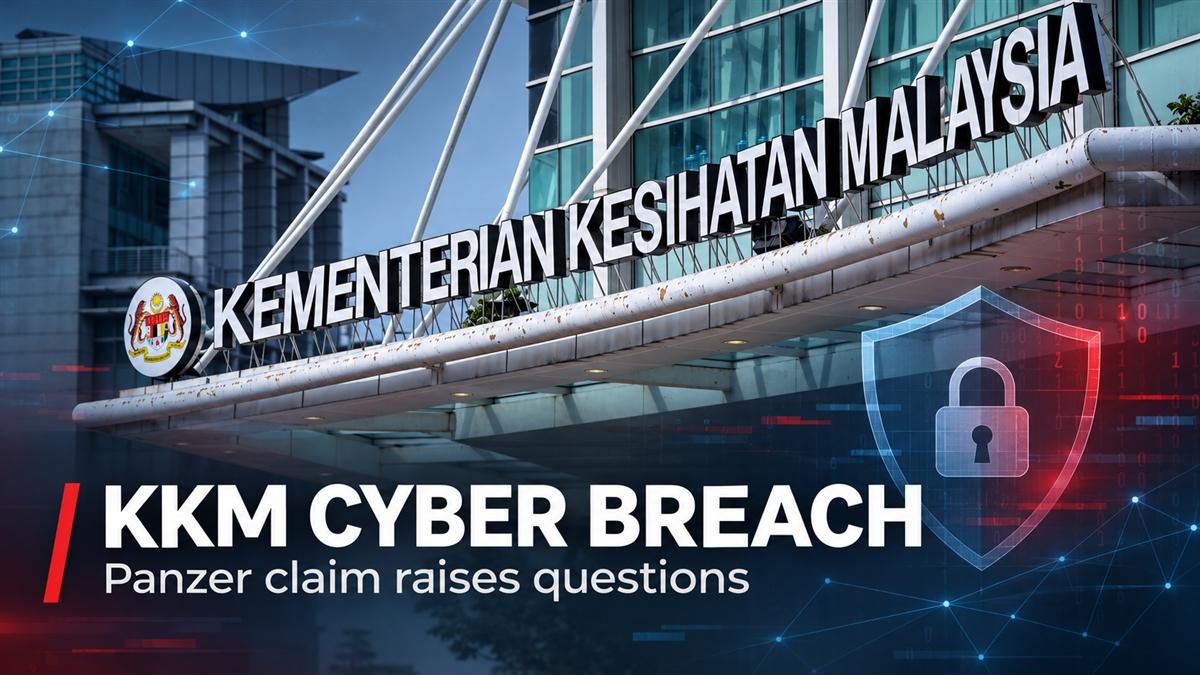
The incident was detected on 12 November 2026, according to a statement issued by KKM on 14 November.
On the same day, the Panzer ransomware group listed Malaysia’s Health Ministry as an alleged victim on its data leak website, according to independent cybersecurity threat intelligence platforms.
However, there is no verified evidence linking the ransomware group’s claim to the cybersecurity incident confirmed by KKM.
The ministry has also not disclosed whether any information was stolen or whether sensitive government documents were exposed.
Panzer Ransomware Group Claims Attack on Malaysia Health Ministry
Cybersecurity threat intelligence platform Brandefense ATLAS recorded Malaysia’s Ministry of Health, identified by its official domain moh.gov.my, on the Panzer ransomware group’s leak website on 12 November 2026.
Another cybersecurity monitoring platform, ThreatCluster, independently recorded the same listing. According to ThreatCluster, the ransomware group’s listing did not provide details about the number of files, amount of data or specific records allegedly obtained.
Brandefense also confirmed that the listing contained no stated amount of compromised data.
Panzer is a ransomware group that publicly names organisations it claims to have compromised.
As of 14 November 2026, Brandefense had recorded 50 organisations listed by the group since August 2026. These listings are commonly used by ransomware operators to pressure organisations into responding to their demands.
However, a ransomware leak-site listing does not independently establish that an attack was successful or that any data was stolen.
KKM’s statement did not mention Panzer or establish whether the group was responsible for the unauthorised access detected on 12 November.
KKM Confirms Unauthorised Access to File-Sharing Platform
In its official statement, KKM said an initial investigation by its Computer Security Incident Response Team (CSIRT) found that the incident was limited to unauthorised access to a supporting file storage and sharing platform at one of its facilities.

The ministry said the incident did not involve encryption of its main databases.
KKM also confirmed that its major operational systems, healthcare services and patient treatment activities were unaffected and continued operating normally.
The ministry said members of the public could continue attending medical appointments and receiving treatment at its healthcare facilities.
Following the incident, public access to the affected file-sharing platform was blocked.
KKM also introduced additional cybersecurity controls at the affected facility, including resetting user passwords, auditing servers and enforcing multi-factor authentication (MFA).
The ministry said it would continue working with the National Cyber Security Agency (NACSA) under the Cyber Security Act 2024 (Act 854) to manage the incident and monitor its systems.
However, KKM did not identify the affected facility or explain how the unauthorised access occurred.
Did the KKM Cyberattack Result in Stolen Data?
Although KKM confirmed that its main databases were not encrypted, the statement did not establish whether files stored on the affected platform had been accessed, copied or stolen.
Encryption and data theft are different cybersecurity risks.
Some ransomware attacks involve encrypting systems to prevent organisations from accessing their information. Others involve stealing confidential data and threatening to publish it unless the organisation meets the attackers’ demands. Both methods can also be used together.
An organisation’s computer systems can therefore continue operating normally even if information has been stolen from an exposed platform.
In KKM’s case, the ministry has not disclosed what information was stored on the affected file-sharing platform. It has also not confirmed whether patient information, employee records or confidential government documents were accessible during the incident.
There is currently no verified evidence that patient medical records were stolen.
In its statement, KKM warned the public that downloading, possessing or distributing official government documents obtained unlawfully could result in legal action.
However, the ministry did not explain whether the warning was related to any documents obtained during the latest incident.
The full extent of the unauthorised access and any possible data exposure remain unconfirmed.
Second Health Ministry Cybersecurity Incident in 2026
The November cybersecurity breach follows an earlier attack involving the Ministry of Health’s official website on 27 June 2026.
During that incident, the ministry’s website was compromised and displayed a message attributed to a hacker identified as MUSHR00W, alongside references to Anonymous.
KKM acknowledged the incident and advised the public not to access its website while investigations were carried out.
NACSA subsequently identified a vulnerability involving a Joomla content management system extension that was believed to be associated with the compromise of several Malaysian government websites, including the Health Ministry’s portal.
The vulnerability could allow attackers to execute malicious code on an affected web server.
NACSA advised affected organisations to install security updates and implement additional protective measures.
On 30 June, KKM announced that it had temporarily suspended access to its official website to carry out cybersecurity improvements.
The ministry said there was no indication that critical systems or sensitive information had been compromised. It also clarified that its public website was used to publish corporate information and did not store patient medical records.
The June and November incidents involved different systems. There is no verified evidence that they were connected or involved the same attackers.
Nevertheless, the latest incident marks the second publicly acknowledged cybersecurity compromise involving KKM within five months.
KKM Yet to Confirm Whether Sensitive Information Was Exposed
Despite confirming unauthorised access to its file-sharing platform, KKM has not publicly disclosed the duration of the intrusion, the method used by the attacker or whether any files were extracted.
The ministry has also not identified the affected facility or confirmed whether the Panzer ransomware group’s claim is linked to the incident.
These details are important because the absence of system encryption or healthcare service disruption does not necessarily mean that confidential information was protected from unauthorised access.
For now, KKM has confirmed a cybersecurity breach affecting a supporting file-sharing platform, while the Panzer ransomware claim remains unverified.
Further findings from KKM and NACSA will be needed to establish the full extent of the incident, including whether any sensitive information was compromised.
0
Tagged: KKM, KKM cyberattack, KKM data breach, Malaysia cybersecurity, Ministry of Health Malaysia, NACSA, Panzer ransomware
- You must be logged in to reply to this topic.